
Metallic Epoxy Floors in Connecticut
A deep, glossy, one-of-a-kind finish with swirls and movement that looks like polished stone — for showroom garages, finished basements and man caves.
Get a Free Quote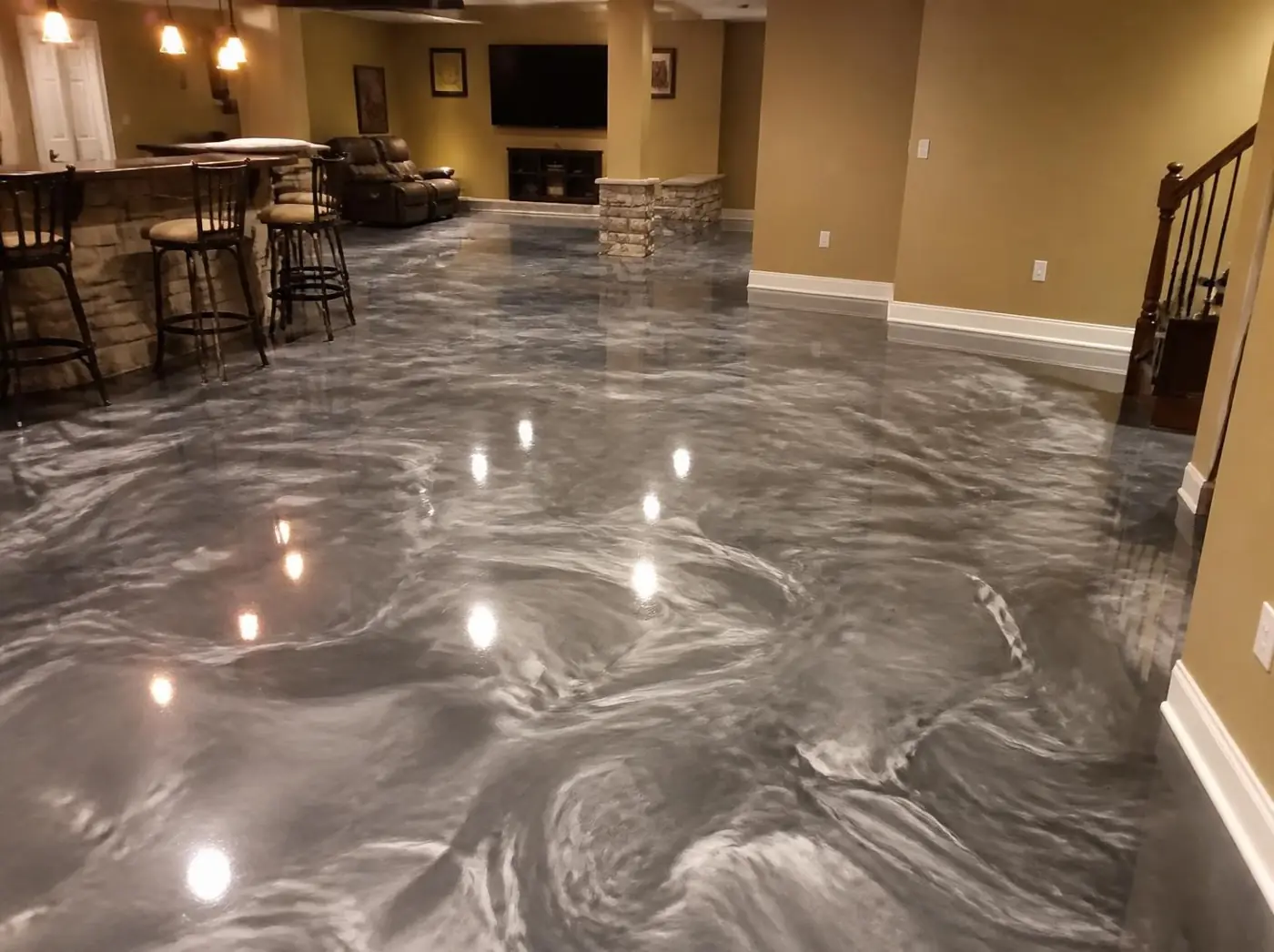
When plain concrete is not the look you want
Some spaces are meant to be shown off — a garage that doubles as a showroom for a classic car, a finished basement that hosts game nights, a man cave or home gym. Gray concrete, even sealed, does not match the rest of the house. Tile and laminate can crack or struggle with moisture on a slab, and carpet is a non-starter anywhere water or salt might show up.
The solution: metallic epoxy
Metallic epoxy is a decorative coating that uses fine metallic pigments mixed into a clear or tinted epoxy. As the epoxy is placed and worked across the floor, the pigment flows and settles to create swirls, ripples, highlights and a sense of depth. The finish can look like marble, polished stone, liquid metal or a lava-flow pattern, depending on the colors and technique. A clear topcoat then protects it.
Because the pattern forms while the material flows, every metallic floor is unique. That is part of the appeal — and also why it takes more care and skill than a solid or flake floor.
Where metallic epoxy fits best
- Showroom garages. Collector cars, motorcycles and workshops that stay mostly closed and clean.
- Finished and partly finished basements. A durable, wipe-clean floor for rec rooms, bars and gyms — after the slab passes a moisture check. See basement floor epoxy.
- Man caves, bonus rooms and home gyms. Spaces where you want a statement floor that still handles spills.
Where it may not be the best fit: a daily-driver garage that sees heavy winter slush. Metallic floors show salt film, water spots and scratches more than a speckled finish. For that garage, a flake epoxy floor or a polyaspartic flake system is usually the more practical choice.
Slipperiness: an honest look
A high-gloss metallic floor can be slick when wet, oily or dusty. That is true of most smooth, glossy surfaces. If the floor will see water, snowmelt or bare feet, we generally recommend an anti-slip additive in the topcoat or a satin-sheen finish. Either option adds grip with a modest change in appearance. Mats at doorways and in front of a workbench help too. Our article on whether epoxy is slippery covers the options in more detail.
How a metallic floor is installed
Metallic floors are less forgiving than flake, because there are no chips to hide what is underneath. Prep is everything:
- Grind and repair. Diamond grinding, then crack and pit repair, ground smooth. Any flaw left here can show through the finish. Learn more about concrete repair and floor prep.
- Primer and base coat. A primer seals the slab, and a tinted base coat sets the background color.
- Metallic coat. The metallic epoxy is poured and worked across the floor to build the pattern while it is still fluid.
- Clear topcoat. A protective clear coat, with optional anti-slip additive, seals the finish and adds wear resistance.
Metallic floors typically take more than one day, and cure times depend on the products and temperature. Epoxy generally needs the slab around 50°F or warmer, so we plan installs around Connecticut seasons. Our process page explains what to expect.
Typical metallic epoxy pricing
As a typical range, metallic epoxy runs about $7–$12 per square foot installed. Heavy repair can add roughly $1–$3 per square foot. The price reflects more material, more prep and more skilled labor than a standard floor. These are estimates; see our garage floor epoxy cost guide or get a free quote for your space.
Metallic floors around Greater Hartford and New Haven
We install metallic epoxy in garages and basements throughout the region, including Avon, Cheshire and Guilford. See every town we serve on our service areas page.
Frequently asked questions
Is a metallic epoxy floor slippery?
A smooth, high-gloss metallic floor can be slippery when wet, oily or dusty — the same as most glossy surfaces. In a garage that sees snowmelt, we usually recommend adding an anti-slip additive to the topcoat or choosing a satin finish. It slightly changes the look but adds real traction. Rugs or mats at entry points also help.
Can metallic epoxy go in a garage that sees road salt?
It can, with the right expectations. A sealed metallic floor keeps salt brine out of the concrete, but the smooth, glossy surface shows salt film, water spots and scratches more than a flake floor does. Homeowners who park daily in winter often choose flake for the garage and metallic for a basement or bonus room.
Will my metallic floor look like the photos I have seen?
Every metallic floor is one of a kind. The swirls, depth and movement come from how the pigment flows while the epoxy cures, so no two floors match exactly. We can steer the color, contrast and general style, and we will show you samples, but you should expect a unique result rather than a copy of a specific photo.
How much does a metallic epoxy floor cost?
Metallic epoxy typically runs about $7–$12 per square foot installed. It costs more than flake because it uses more material, needs a very well-prepared slab and takes more skilled labor to place. Heavy crack or spall repair can add roughly $1–$3 per square foot. Our cost guide explains the factors, and a free estimate gets you a firm number.
Ready for a garage floor that cleans up in minutes?
Free on-site estimates across Greater Hartford and New Haven County.